


Whether you have equine companions just living out in the fields, are an avid competition rider, or sit anywhere in between the two – as a horse owner, there will no doubt be a time that you need to load your horse. Some might travel weekly, others on the odd occasion when they visit the beach or need a trip to the vet, either way the more prepared you and your horse are, the better the experience will be for both of you.
Loading and travelling your horse can sound daunting and some horse owners find it overwhelming. A horse that does not want to load can be frustrating, especially when you are on a time frame for veterinary appointments or competition times! Preparing and training your horse for loading in your own time, under no pressure, will help make your next outing stress free.
Understanding your horse
Before starting loading training, look at things from your horse’s point of view to help understand why they might be hesitant or why you might stumble across some hurdles along the way. Horses are herd animals; they are not always keen on leaving their friends. They are flight animals; putting them into a contained space takes away their ability to respond to their natural instincts. Their vision does not adjust as quickly as ours when moving from a light space into a darker one, and having things move under foot is not something they naturally come across. Taking this into consideration, you can see why a horse might be a tad reluctant to just walk on into a trailer or horsebox! And this is without any other complications such as if they have had a previous bad experience loading and/or travelling which has knocked their confidence – forceful handling or abrupt driving for example.
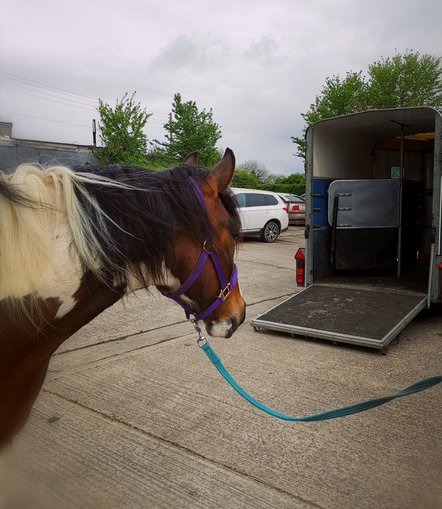
For successful loading and travelling, you need to look at the whole picture and try to be prepared for each step. A lot of focus gets put on the loading itself, but getting the horse in is only one part of the process. Next comes closing the partitions, putting up the ramp, travelling for the duration of the journey, and then coming off the trailer/horsebox at the other end! It sounds like a lot, but if you break it down it is very much achievable.
Preparing for loading
- Familiarise your horse with the trailer or horse box
Start by spending time to help your horse become accustomed to being near the trailer/horsebox. Before you begin loading, you don’t want your horse to feel anxious about approaching the vehicle in the first place. Familiarisation can be incorporated into your daily routine – walk past and around it on the way to and from the field. If possible, position it in the field so your horse can explore it freely and build confidence without pressure.
2. Strengthen the basics on the ground
Before thinking about loading, take it back to basics and focus on groundwork. There are many in hand exercises that you can work on that will make things easier for you when it comes to loading, and the more confident and responsive your horse is, the more likely loading training is going to be successful. This does not just mean leading and walking forward on command. Build on good leading by practicing backing up – asking your horse to take a few steps back, calmly and with confidence. Good coordination and awareness of their foot placement will help your horse feel confident moving into, around and back out of the box.
Next, start practicing asking your horse to move away from you, asking for things such as turning on the forehand or haunches. After walking into the box, these techniques are especially useful when it comes to positioning your horse and moving them around in a tight space. Especially on a lorry where they travel side facing, or on a side loader. Using poles is a good way to simulate this – you can mark out a box on the floor and practice moving your horse within it. Or set up a few pole exercises that require you to manoeuvre your horse around them. For example reversing around an L shape, or walking through a narrow serpentine set up. Being able to calmy and confidently manoeuvre your horse and be in control of where they are putting their feet not only helps with loading but will help you feel more confident manoeuvring in the box and unloading your horse at the other end.
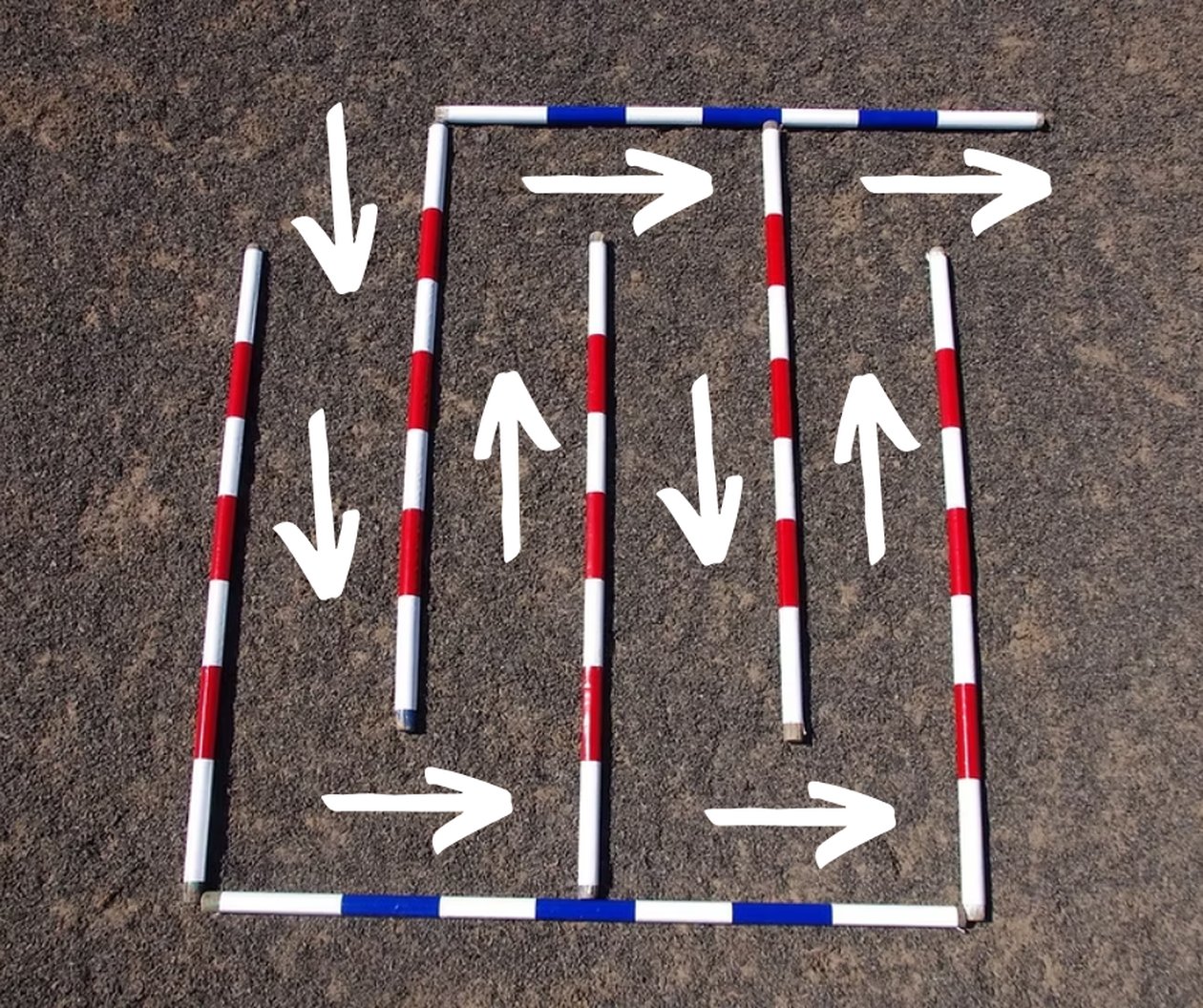
Serpentine pole exercise (Image credit: Horses Inside Out)
3. Introduce obstacles
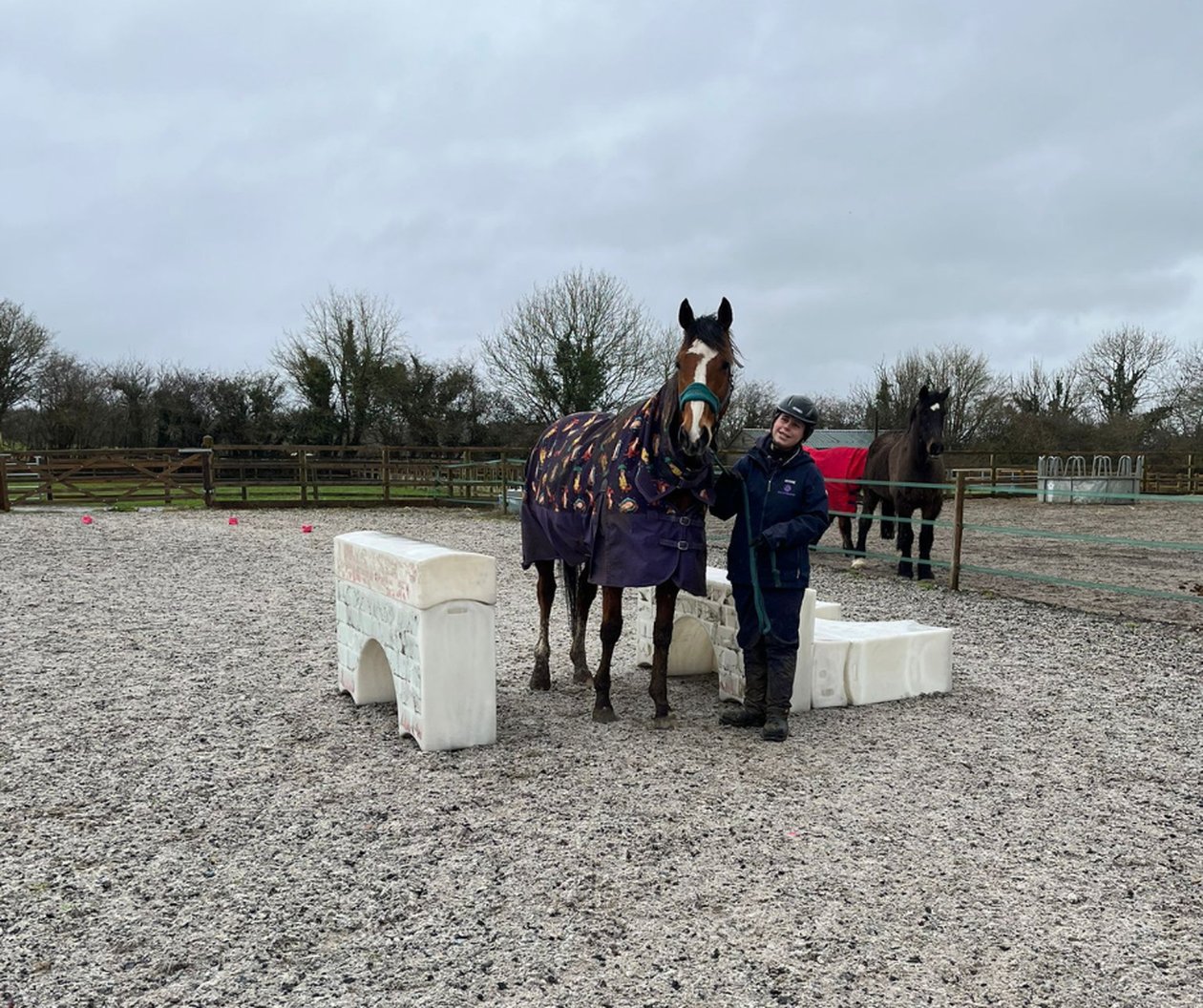
When you are happy and confident working with your horse in hand, start introducing a few obstacles. Walking over different surfaces can be challenging for horses and is a great way to build up to walking on a ramp. Carpets and tarpaulins work well for this. Walking under things, such as an archway, can prepare your horse for walking into the box and having the roof above its head. Walking through narrow spaces can also be valuable – a simple way to practice this is to walk between a few jump wings that you can move closer together. Think outside the box – there are a number of things that can be used to practice all steps involved – for example opening and closing a gate behind your horse in preparation for partitions, or walking over a weighbridge or something as simple as a wooden board to simulate the noise of the ramp.
4. Be a confident leader
Throughout these exercises practice being a calm and confident leader. Think about your body language and energy and what this is communicating to the horse. Continue this when it comes to loading your horse - be confident and encouraging.
5. Gradually progress to loading your horse
When you and your horse are confident with these exercises, progress to loading. As with all horse training, break it down as much as you need to – if your horse is unsure do not set your sights on loading and shutting your horse in straight away. Focus on one step at a time: the approach, the ramp, walking through or in/out, stopping whilst inside, then closing the ramps. These do not need to all be achieved in one training session – you want to try and keep your horse’s adrenaline as low as possible, so try not to ask for too much too soon.
Practical loading tips
- When starting off, park your box in a well-lit place that your horse feels comfortable in, facing a way that will encourage your horse to walk in or through (e.g. towards their field). If you are unsure on how they might behave, training in an arena can be a safe space to start.
- If walking your horse in for the first time, open up the trailer/box as much as possible and remove anything inside, make it as welcoming as possible.
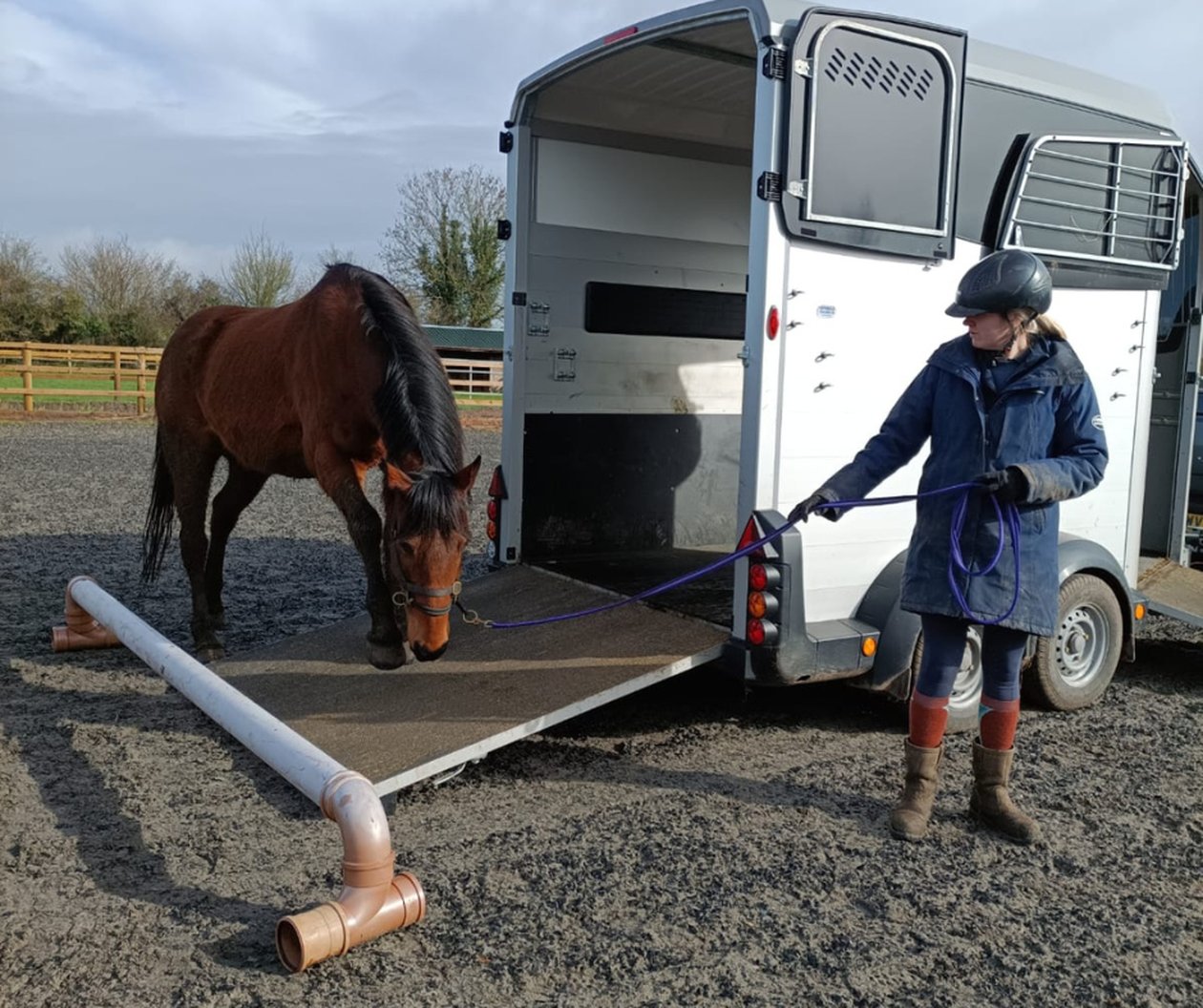
- If the ramp is an issue for your horse, walking over it without going in the trailer/box can be an effective way to build confidence.
- Do not stand directly in front of the horse, blocking them from seeing where they are going.
Throughout the process, make sure you praise your horse - praise any positive efforts your horse makes. Remain calm and quiet but purposeful, giving your horse the time and space he needs to feel comfortable. Using food as positive reinforcement can be a useful tool when loading, also providing your horse with positive associations with loading.
Partitions or no partitions?
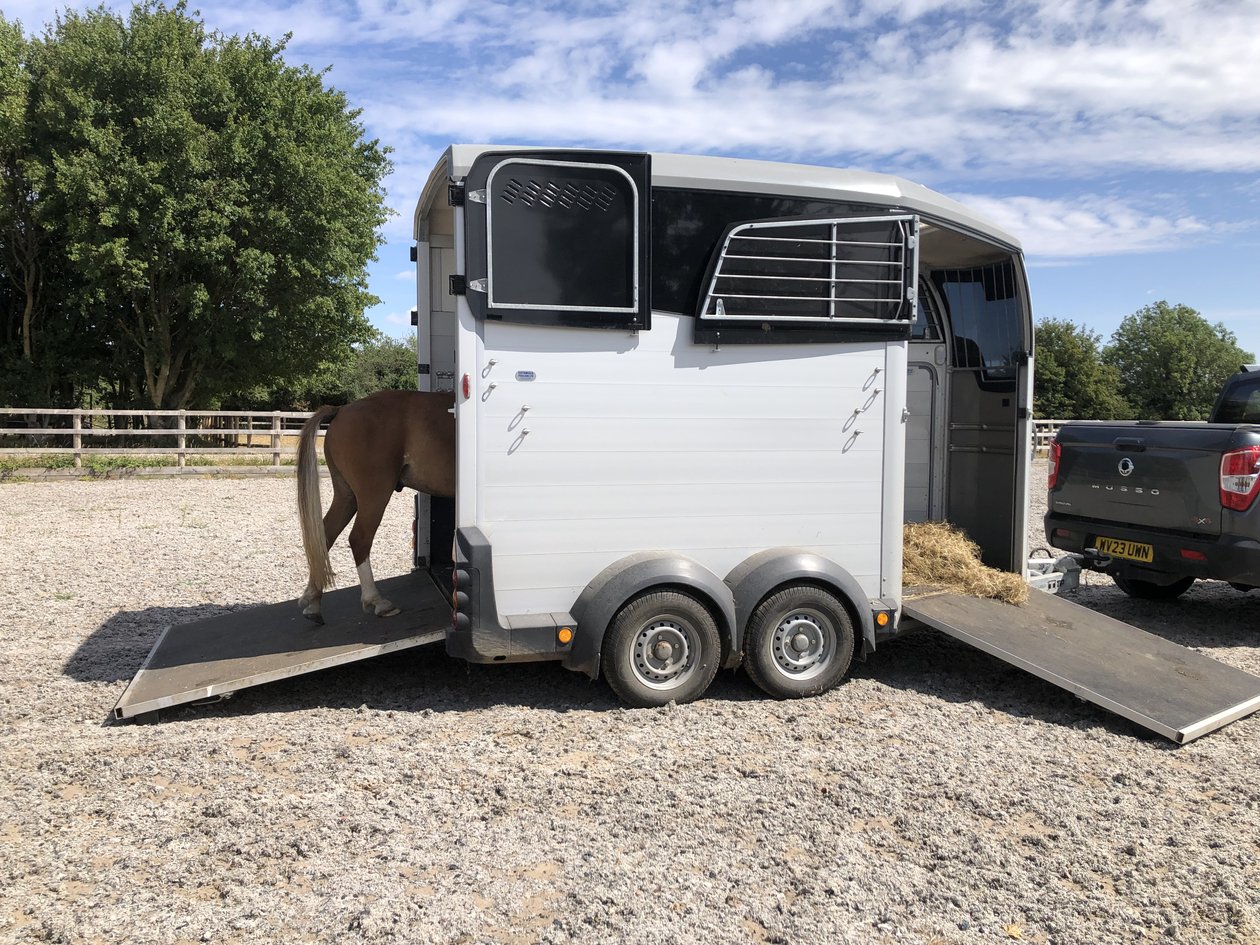
If your horse has never loaded before, it is advised to start without partitions. It makes the space a lot more open and inviting. As for travelling, partitions in a trailer can cause complications with youngsters that have not travelled before – they can get caught over or under the breast bar if they panic. It is thought that when travelling, if they practice with no partitions horses are less likely to lean on them for support in the future.
Not all these steps will be relevant to you – it will very much depend on you and your horse’s experience and level of confidence. It is important that you are honest and realistic about what you and your horse need, and do not rush the process. As with all aspects of horse training and handling there is more than one way of doing things - all these steps can be adapted to fit your way of working and your training methods. But, whatever your way of working, every effort should be made to encourage your horse and praise them when they make a good choice, building their confidence along the way. Training can take time and there is no harm in going back a step to help further progress in the long run. Hopefully with time, consistency, and patience, you and your horse will be able to load in a calm and controlled manner, without force and/or anxiety.
Travelling
Planning and preparing
If your horse has never travelled before the best way to start is with a short journey. The duration of the trip can be built up over time, in line with your horse’s confidence. Whatever the duration or purpose of the journey, good planning is key.
- Plan your route: It will help your confidence knowing where you are going and ideally, what the accessibility and parking is like at the other end.
- Consider the weather: A first trip on a very wet and windy day is perhaps not the best idea!
- Check your trailer/horsebox before setting off: Ensure all ramps are closed and secure.
- Leave plenty of extra time: Give yourself enough time to prepare and travel calmly so you aren’t rushing, which can stress both you and your horse.
Drive safely
To have a successful journey for both you and your horse, drive safely! Excessive or harsh pulling away or braking will unbalance and potentially unsettle your horse. Going too fast around corners and making harsh turns can also make for an uncomfortable journey. Anticipate traffic ahead, giving yourself enough space to pull out or adjust your speed when needed. Smooth, predictable driving helps your horse remain calm throughout the journey.
Ensure your horse's comfort during travel
Your horse will be calmer and more relaxed if they are comfortable during the journey. Provide a hay net with plenty of hay or haylage so they can eat throughout the trip. Adding bedding can also improve comfort, particularly on longer journeys. Ensure there is adequate ventilation to prevent overheating and/or respiratory issues. Having a camera in your trailer can be a good way to monitor your horse and their behaviour throughout the journey – though this can become a distraction when driving so use with care.
Important: It is a legal requirement to have the horse’s passport on board when transporting.
Arrival, unloading, and the return journey
You have loaded successfully, travelled the duration of the journey, and have reached your destination – now it’s time to unload. Don’t forget that the exercises you have worked on previously very much play a part here. Continue to remain calm, confidently manoeuvring your horse to safely exit the box. Try not to let your horse rush and give your horse as much as space as you can to avoid catching themselves on the partitions/side of the box on their way out. Travelling can be strenuous for the horse – ideally give them some time to settle and rest after unloading.
It is not uncommon for horses to take a step back when it comes to loading to come home again after an outing. Do not get flustered if this happens and remember what you have practiced at home – break it down, turn it into an exercise and work through your steps calmly.
Health and safety
- Always make sure that the ramp of the box is on solid, level ground.
- Clear the horse’s space of tack/rubbish that could move during travel.
- Always use transport that is an appropriate size for the horse.
- Ensure the box is in good condition, with a robust floor.
- Always wear appropriate PPE – riding hat, gloves, appropriate footwear.
- Always carry an equine first aid kit when travelling and make sure you have water and hay, in case of emergency.
- Ensure you have the correct insurance, including equine recovery should you break down.
- If it is just one horse travelling with partitions, they must go on the right-hand side of the trailer (the driver’s side). If two horses are travelling together, the heaviest horse should travel on the right-hand side.
- Make sure your bars are put in the correct way on the trailer. The breast/bum bars have a hook on one end, and an L-shaped bracket on the other. The hook should be placed on the central partition, with the L shape on the outerside of the trailer. This is to allow quick release in emergencies.
Practice!
Some horses might take well to loading and travelling and don’t need much in between outings. Other’s might need a regular refresh! Consider what is needed for you and your horse and factor in practice as needed.
With patience, consistency, and calm leadership, loading and travelling can become a positive experience for both horse and owner. Focusing on preparation, comfort, and safety helps your horse stay relaxed and confident. Celebrate small successes, go at your horse’s pace, and practice regularly, over time, every journey can be smooth, safe, and stress-free.