


Long reining is an incredibly valuable skill for horses of all ages and disciplines. At HorseWorld, it plays an essential role in the training and fitness programmes for many of our rescued horses and ponies. Whether you're preparing a youngster for backing, supporting a horse through rehabilitation, or simply adding variety to your routine, long reining can transform your groundwork. In this practical guide, we explore the key benefits of long reining, how to get started safely, and what equipment you can use to help you train with confidence.
What is long reining?
Long reining, also known as long lining, involves working your horse from behind or slightly to the side using two long lines attached to a bridle, bit, or training headcollar. It encourages independent movement, clearer communication, and more advanced groundwork than lunging. Long reining is an excellent tool for building balance, confidence, and understanding between horse and handler.
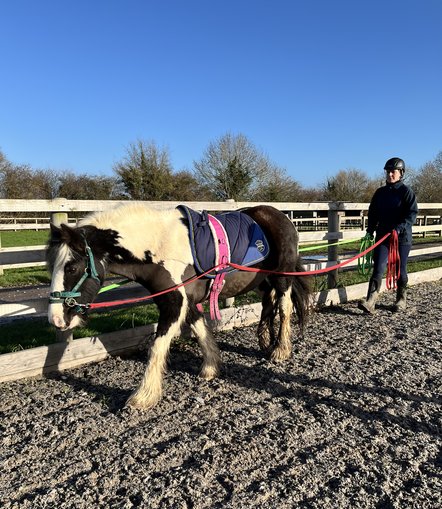
What are the benefits of long reining?
1. Ideal preparation for backing young horses
Long reining reinforces steering, contact, and clear communication - essential before introducing a rider. Practising transitions and basic exercises from the ground creates a strong foundation for future ridden work.
2. Builds confidence
Long reining helps horses gain confidence by allowing them to work independently while responding to clear cues. Practising transitions, changes of direction, and basic exercises in a safe, controlled environment helps nervous or inexperienced horses become more self-assured, relaxed, and willing, laying a strong foundation for future training.
3. Key training step for future driving horses
Horses learn to work ahead of the handler with independence, helping them progress towards harness work.
4. Provides mental stimulation for horses that can’t be ridden
Some horses are unable to be ridden due to age, medical conditions, poor conformation, or injury. For these horses, long reining offers a highly beneficial alternative form of exercise that keeps them mentally engaged and emotionally fulfilled without the added weight of a rider, helping to reduce boredom or frustration while maintaining communication, focus, and overall wellbeing.
5. Supports training without rider weight
Long reining is an alternative exercise to riding, which allows you to focus on specific aspects of training without a rider on board - such a suppleness or engaging the back end.
6. Perfect for parents/carers of small riding ponies
Adults can safely help with schooling even if they’re too large to ride the pony themselves.
7. Adds variety to your horse's routine
Long reining introduces a different type of work into your horse’s schedule, breaking up the monotony of regular riding or lunging. By varying exercises, movements, and patterns from the ground, it keeps your horse mentally engaged, prevents boredom, and encourages them to stay attentive and motivated throughout their training.
8. Let’s you observe your horse’s movement
Seeing your horse from behind and the side can reveal gait irregularities, stiffness, or weaknesses that are not obvious when riding. You can see exactly how your horse is moving and what adjustments you can make to improve their way of going.
9. Excellent for rehabilitation
Long reining provides controlled, unweighted exercise that builds strength, muscle, and balance under professional guidance.
10. Improves handler skills
Long reining encourages awareness of body language and co-ordination, as well as your energy and how you combine these to positively communicate with your horse.
Before you begin
Introducing a horse to long reining can be a daunting task, but if you break it down into steps it is very achievable and can be fun for you and your horse.
Health check: Ensure your horse is physically ready. A veterinary, physiotherapy, or chiropractic assessment is ideal before starting groundwork or backing.
In-hand basics: Good leading and in-hand walking is a key step when preparing your horse for groundwork, and often one that is overlooked. To progress with groundwork the horse should be relaxed and have an active walk, whilst being in tune to the handler.
Choose the right environment: Start in an enclosed, safe area with secure fencing and good footing. Once both you and your horse are confident, you can progress to open spaces, roads or quiet lanes.
Tip - If you and your horse are both new to long reining, gain some experience from an established horse first. Try long reining another human too – you’ll be surprised what you can learn!
Recommended Equipment
Quality, well-fitting equipment makes training safer and more effective. For long reining work, we recommend:
- A bridle or training headcollar
- Two long lines (safety tip – preferably without loops on the end)
- Roller or saddle
- Saddle pad (if using saddle)
- Safety PPE (riding hat, gloves, boots and high vis)
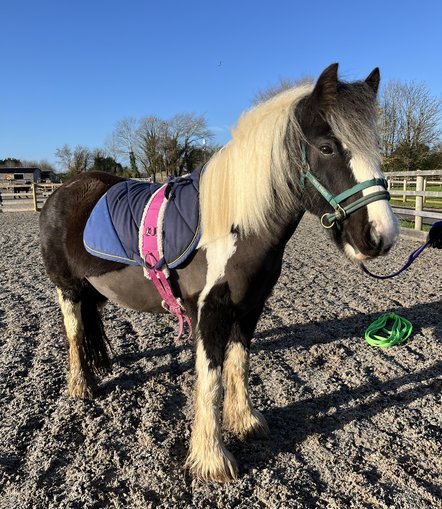
Introducing your horse to the lines
Introducing a horse to long reining can take time and should be done at a pace to suit the horse. Some horses take to it quickly, whilst others can take a while to be accustomed to the lines and understand what is being asked of them. Taking your time and breaking it down into a gradual process will help build confidence and set good foundations for future training.
Desensitisation
Allow the long lines to gently touch and slide across your horse’s shoulders, sides, and hindquarters. This helps your horse become comfortable with the feel and movement of the lines around their body. By exposing them gradually and calmly to these sensations, you reduce the likelihood of fear or tension when the lines shift during groundwork or driving. You can also lay the lines on the ground and encourage your horse to walk over them. Over time, this builds confidence, trust, and a more relaxed response to handling the required equipment on different areas of their body.
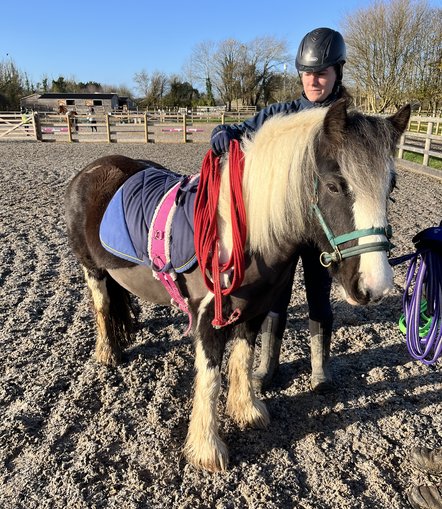
Familiarisation to the lines
Have a friend to help you and ask them to hold one end of the line, whilst you walk behind holding the other end. When your horse is settled, gradually allow the line to rest against the horse’s body. Repeat this on both sides. Practice bringing the line around the back of the horse to ensure they are comfortable with the line touching their back end. Attach the long lines once your horse is standing quietly and is fully comfortable in their tack. Clip each line to the bit or to the side rings of the headcollar, ensuring they are even and free of twists. Take your time and stay calm during this step so your horse associates the process with relaxation.
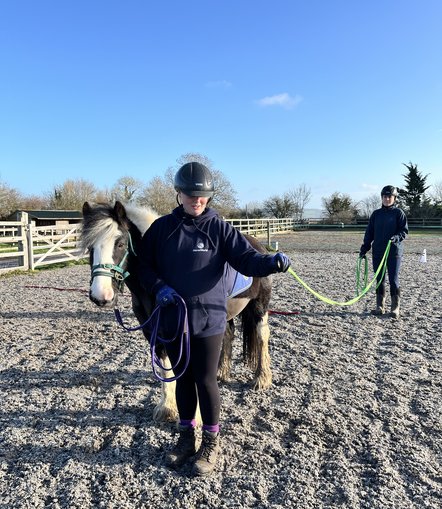
Helper support
Ask a calm, experienced helper to lead the horse forward while you walk behind, holding both long lines. As the horse walks, gently let the lines rest against their sides and hindquarters, allowing them to feel the movement without pressure. Keep your voice soft and your body relaxed so the horse can take confidence from both you and the helper. Continue this until the horse shows signs of relaxation, such as lowering their head, softening their steps, or releasing tension. This gradual approach helps the horse understand that the sensation of the lines along their body is safe and nothing to worry about.
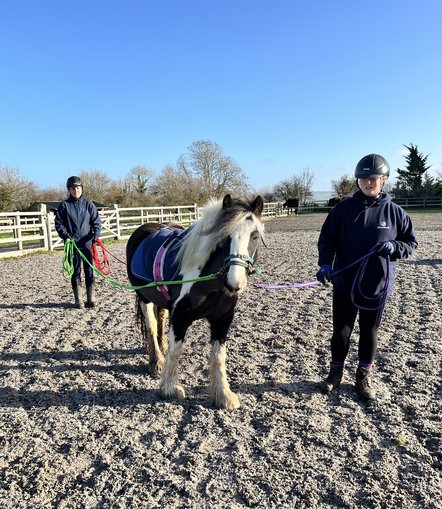
Safe positioning
Try to position yourself slightly to one side of the horse rather than directly behind them. This keeps you out of the kick zone and ensures the horse can still see you in their peripheral vision. Avoid standing in the blind spot directly behind the hindquarters, as sudden movements or pressure from the lines could startle them. By maintaining a safe, visible position, you protect yourself while helping the horse stay relaxed and aware of where you are throughout the training process.
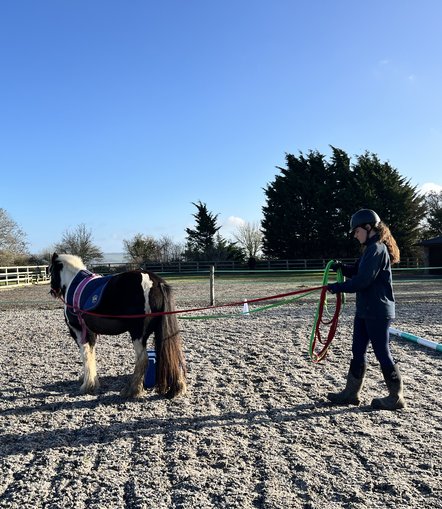
Moving forward
Ask your horse to move forward with clear, consistent commands, that have already been reinforced when leading and in-hand walking. This may include a combination of body language, vocal cues such as "walk on" or a click sound, and line pressure. If the horse doesn't respond, add a gentle flick of the reins against their side to encourage forward motion. Always follow the horse's forward movement by taking a few steps yourself to avoid a heavy "pull" on its mouth. Practice walk-halt transitions while a helper stands near the horse's head. Over time, your helper can step away so the horse begins to work forward while listening to your aids.
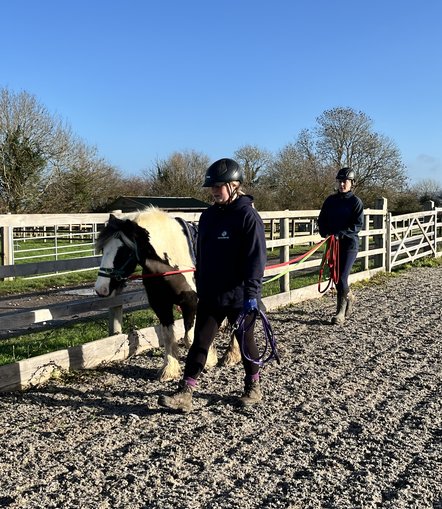
Different exercises
Start with basic transitions - such as walk to halt, halt to walk, and walk to trot, as well as changes of direction. These basics help your horse understand your cues through the long lines and build their confidence in responding calmly and consistently. Once you are happy with their balance, steering, and responsiveness, you can introduce a wider range of exercises. Long reining opens the door to plenty of engaging work, including loops, serpentines, lateral movements, and walking over poles. These patterns not only improve suppleness and coordination but also keep the horse mentally stimulated and enjoying the training.
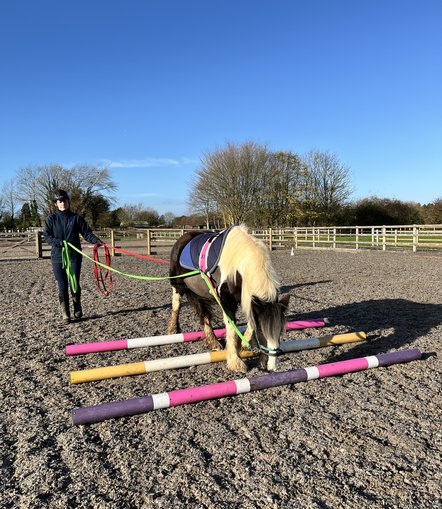
Body language and verbal cues
Use your whole body, not just the lines, to guide the horse. Your posture, energy, and clear voice cues play a major role in helping them understand what you’re asking. Stand tall, stay confident, and let your movements be purposeful - horses read subtle changes exceptionally well. Pair your body language with consistent verbal cues for transitions and turns, reinforcing what you’re asking without needing to rely heavily on rein pressure. As you work, you’ll often see the horse flick their ears back toward you, showing that they’re listening and tuning in to your instructions. This creates clearer communication, builds trust, and encourages the horse to stay soft, responsive, and attentive throughout the session.
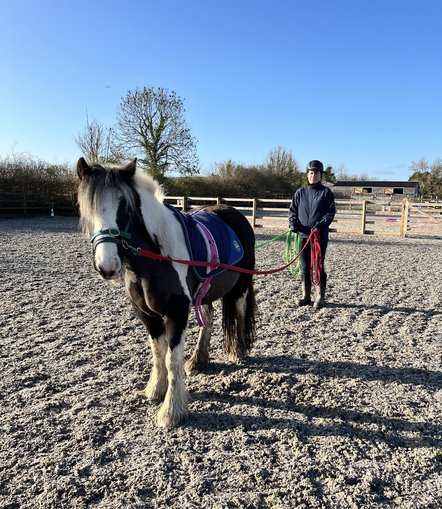
Remember: Progress isn’t always linear. Be patient - some horses may need several attempts before fully understanding what is being asked.
Long reining can be introduced at any age, and it’s best done while your horse is fit and healthy. If your horse is recovering from injury or undergoing rehabilitation, having prior experience with long reining will give you the confidence to incorporate it safely into their recovery programme. Spending time on groundwork not only improves physical fitness but also strengthens your horse’s confidence and trust in you, helping to create a happy, relaxed, and responsive partner. With consistency and patience, both you and your horse will become more skilled and confident in long reining, making it a valuable and enjoyable part of your regular exercise routine.