


Not every horse can be ridden, but that does not mean their lives have to lack exercise, stimulation or opportunities to learn and connect with the people who care for them. From gentle in-hand walks and obstacle courses to carefully selected stretches and pole work, there are lots of ways to help enrich your horse’s life.
Most of the horses at HorseWorld enjoy life as non-ridden companions. There are many reasons why a horse may not be suitable for ridden work, including age, health conditions, previous injuries or behavioural challenges following neglect or abuse. Being unable to be ridden does not mean a horse cannot benefit from appropriate gentle exercise, and spending some additional time with your horse can help strengthen bonds and build trust.
Before you begin
Before introducing a new activity, consider your horse’s health, fitness, temperament and previous training. Start with simple activities and keep sessions short. Aim to end on a good note and stop if your horse shows signs of discomfort, fatigue or distress.
If your horse has a diagnosed condition, ongoing lameness, pain or other mobility concerns, seek advice from your vet before starting an exercise programme. A suitably qualified equine rehabilitation professional can also help you identify activities that are appropriate for your horse.
Equipment you may need
- A suitable, correctly fitted headcollar and lead rope are usually all that is needed. For horses requiring additional control, a specialist control headcollar may be appropriate when used correctly. Always ensure you understand how to fit and use the equipment safely, and seek professional guidance if you are unsure.
- A riding hat, sturdy footwear and gloves for the handler.
- High-visibility clothing for both horse and handler when going out on public roads.
- Items such as poles, cones, buckets, old rugs, tarpaulins, flags or bunting – time to use your imagination! Check that all items are safe, stable and free from sharp edges or loose parts.
- Suitable rewards, such as carrots, apples, horse treats or a portion of the horse’s usual hard feed.
In-hand walking
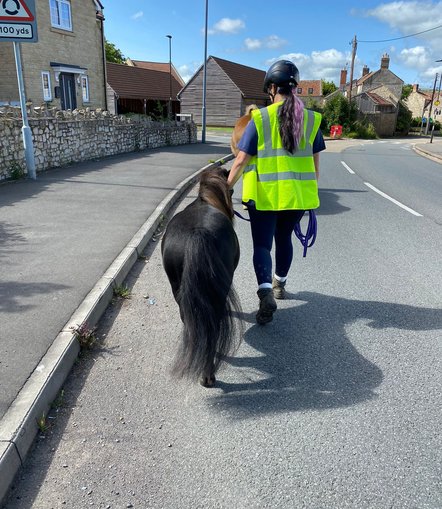
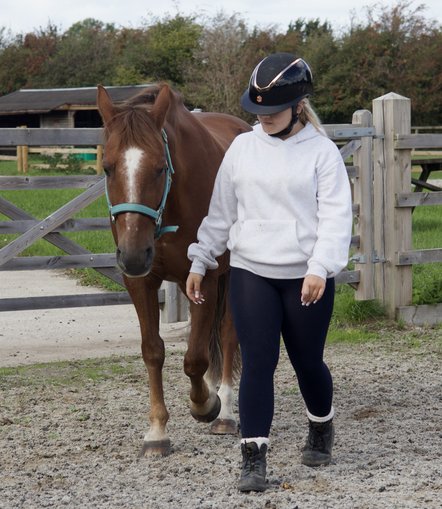
Taking your horse or pony for a walk in-hand can provide gentle movement, mental stimulation and is a great opportunity to build your relationship. Brisk walking can be very effective for weight management and can be a lifeline for horses that are not able to take part in more strenuous cardiovascular work.
If your horse is new to you or has limited handling experience, start in familiar, secure surroundings, such as a suitable yard area, paddock or enclosed arena. Once you are both relaxed and confident, you can gradually explore new areas. Begin with short outings, increasing the duration and introducing new places only when your horse is coping comfortably.
Getting started and choosing a route
- Where to walk: A secure arena or enclosed area may be best at first. As your skills and your horse’s confidence develop, you can explore suitable tracks, fields or quiet routes. Resources such as FootPathMap.co.uk, the Equilab or Bridlewayz apps, and the British Horse Society (BHS) website can help you identify potential routes and safe places to exercise.
- Plan ahead: If you are unfamiliar with a route, check it on foot first. Consider potential hazards, including traffic, gates and other animals, and make sure you know your way home.
- Choose suitable terrain: Begin on even, forgiving ground. Increase the distance or introduce gradients gradually, and only if your horse remains comfortable.
Safety on walks
- Be visible: Follow the Highway Code and wear appropriate high-visibility clothing when walking on or near public roads.
- Wear suitable safety equipment: A riding hat, sturdy footwear and gloves are recommended. Make sure your equipment is in good condition and fits correctly.
- Know your limits: Consider taking a calm, experienced helper if either you or your horse would benefit from extra reassurance. Do not take a horse into traffic or unfamiliar environments if you cannot safely manage the situation.
- Position yourself safely: When leading, stay alongside your horse, near the neck/shoulder area, rather than directly in front or falling behind. At times you may need to lead from either side of your horse, for example when passing a potentially frightening object or to position yourself between your horse and traffic, so ensuring you can lead from either side is essential. If you are unfamiliar with leading from both sides, practise in a secure, familiar environment first.
- Handle the lead rope correctly: Hold the lead rope securely without wrapping or looping it around your hand or fingers. Keep any excess rope neatly folded rather than allowing it to trail.
- Keep your horse engaged: Simple, familiar cues such as halt, walk and turns can add variety to your outing and encourages your horse to stay engaged with you.
Using a schooling Crop: A long riding crop can be used to give signals to the horse for direction and to encourage moving forward. However, it should only be used by someone who understands its appropriate use and has been shown how to apply aids fairly and safely. A horse that is reluctant to move forward may be worried, confused, tired, uncomfortable or in pain. Do not use a crop to force a horse forward; investigate the reason for the reluctance and seek professional advice where needed.
In-hand agility and enrichment
In-hand agility is a great way to keep your horse active while giving them the opportunity to explore, learn and build confidence. These activities encourage horses to think for themselves, make choices and work out new experiences - valuable opportunities that may be missing from their everyday routine.
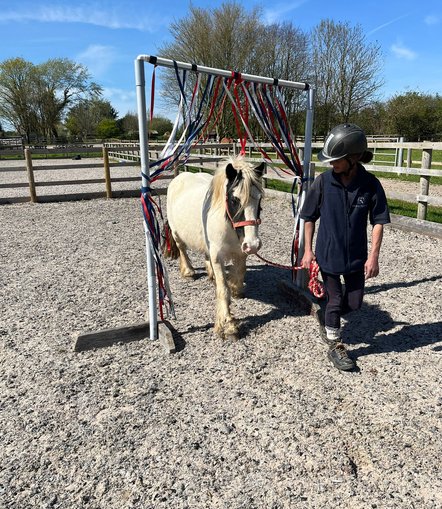
At HorseWorld, our rescue horses take part in a varied training programme that helps them learn to encounter unfamiliar objects and situations safely. They might practice walking over a tarpaulin, navigating a narrow space, passing beneath or through ribbon streamers, or walking forwards and backwards through shapes made with poles. Each new challenge is introduced thoughtfully, allowing the horse time to investigate and learn at their own pace. These little exercises do more than develop confidence, they help strengthen the relationship between horse and handler through trusting one another. By working together, we give our ponies the chance to discover that unfamiliar things don’t have to be frightening – and that learning can be an enjoyable experience.
Getting started
Begin in a familiar, secure area with one or two simple objects. You can observe your horse at liberty, giving them the time and space to look at and investigate the objects at their own pace. Give them the freedom to move away if they feel unsure.
Simple ideas to try:
- Cones: Place cones far enough apart to walk around safely. Begin by practising gentle turns and halts, then progress to weaving between the cones and creating slalom courses.
- Flags and moving objects: Introduce a flag or piece of fabric from a distance, allowing your horse to look at it before gradually moving closer, provided they remain relaxed. Do not wave objects suddenly or use them to drive your horse forwards. Avoid windy conditions, when fabric can flap unpredictably.
- Tarpaulins and ground mats: Lay down a heavy-duty tarpaulin, old rug, rubber mat or flattened feed bag to introduce different surfaces, textures and unfamiliar sounds underfoot. Heavy objects, such as wooden poles, can help keep the material in place. Watch how your horse explores: they may touch it with a foot, tap or scrape it with a front hoof before deciding whether to step on it. Ensure the material lies flat, provides secure footing and cannot bunch up or become tangled.
- Everyday objects: Items such as a bicycle, pram, wheelbarrow or wheelie bin can be used as obstacles in an agility course. This can be a useful part of training when preparing horses to encounter everyday objects when out and about. Keep objects stationary to begin with. When introducing movement, have your horse follow the object rather than moving it towards them.
- Buckets, blocks and poles: Use robust buckets, wooden blocks and poles to create low ground rails to step over, narrow corridors to walk through or simple mazes to navigate. Keep poles low and arrangements uncomplicated to begin with.
- Pool noodles and streamers: Create a “car wash” obstacle by hanging colourful ribbons, streamers or pool noodles from a secure frame or jump wings for your pony to walk past. As they become more confident, you can position two obstacles close together and invite them to walk through the gap – just like a car wash!

Keep it safe and fun
You don’t need specialist equipment, but you do need a safe setup. Choose stable, non-slip surfaces and items that won’t snag, collapse or startle your horse unnecessarily. Introduce one new challenge at a time, allowing plenty of time to look, sniff and investigate. Never force your horse over or through an obstacle, and keep a clear, easy route out of every exercise. If your horse becomes worried, give them space, simplify the task or finish with a calmer activity. The aim is to build confidence, not to see how much your horse will tolerate. Sometimes, choosing to pause and investigate is progress in itself!
Gentle stretches
Stretches can be a fun, reward-based way to encourage your horse to bend and move their neck and body. When appropriate for the individual horse, these exercises can help maintain neck flexibility, encourage controlled movement and body awareness, and support core muscle engagement and postural control. Gentle stretching can also provide valuable mental stimulation. Following a small treat encourages your horse to focus, move thoughtfully and engage with you in a positive way. It can be a lovely opportunity to strengthen your bond while introducing a little variety into their routine.
Stretching is not suitable for every horse, particularly those experiencing pain, stiffness or an underlying health condition. Speak to your vet and consider booking a session with a qualified equine physiotherapist to establish whether stretching is appropriate and develop a plan tailored to your horse.
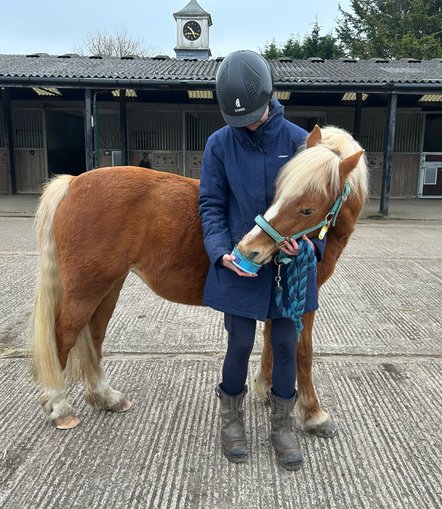
Small food rewards, such as chopped carrots or apples, or horse-friendly treats, can encourage your horse to gently bend their neck towards different parts of their body. These movements encourage controlled stretching, but it’s important to work within your horse’s natural range of movement. Never pull, push or force your horse into a position. Allow them to move slowly and freely and keep each session short and positive.
Choose a quiet area with flat, even, non-slip ground where your horse can stand comfortably and maintain their balance. Use small rewards and let your horse follow them voluntarily, rather than holding the food out of reach. If they struggle to maintain their balance, seem uncomfortable, resist the movement or show any signs of pain, stop and refer back to professional advice. Remember, the aim isn’t to see how far your horse can bend! Keep things gentle, relaxed and rewarding, and let their comfort guide the session. The goal is to encourage comfortable movement and make the experience enjoyable.
Pole work
Incorporating in-hand ground pole work into your horse’s routine can be surprisingly straightforward, and you don’t need expensive equipment to get started. It offers a change of pace and an opportunity to practise calm, careful movement, while encouraging your horse to pay attention to where they place their feet. When introduced appropriately, pole work can help develop coordination, balance, proprioception and accuracy of foot placement. It can also encourage horses to slow down, think about their movements and work with you in a different way.
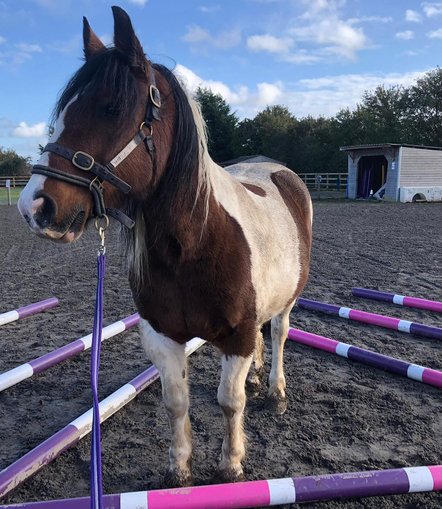
Begin with a simple arrangement of poles at ground level, on flat, even, non-slip footing. Start at a walk and keep sessions short, allowing your horse time to understand the exercise. As their confidence and ability develop, you can gradually introduce more complex layouts. For Shetland ponies and miniature horses, make sure pole spacing and dimensions are appropriate for their size. Remember, one size does not fit all!
Beginner pole-work ideas
A four-pole square: Lay four poles out in a square. Start by walking your horse straight over one pole and out over the opposite side, keeping their approach calm and steady. Once they are comfortable, try walking diagonally across the square, entering through the corner where the two poles meet. You can then introduce halt transitions, including halting in the centre of the square. More challenging exercises, such as positioning the front feet on one side of a pole and the hind feet on the other, should only be attempted once your horse is confident with the basics.
The Serpentine: Instead of simply walking over a pole, try guiding your horse in a gentle, flowing S-shape along the length of one or two poles, crossing back and forth over them. Larger horses may need three poles to provide enough space. This exercise encourages your horse to pay attention to their footing, follow a curved line and coordinate the placement of their front and hind feet. Keep the turns wide and smooth, making sure your horse has enough room to move comfortably without twisting sharply.
A simple pathway: Use poles to mark a wide, clear walkway. Walk through without rushing and reward calm progress. Concentrate on foot placement, avoiding stepping over the poles. If your horse is trained to back up you can then try to manoeuvre through the route backwards. This is more demanding so must be done slowly and calmly.
Liberty work
Liberty work focuses on communication and connection between horse and handler without the use of a lead rope. It can provide mental stimulation, encourage engagement and offer a different way to spend time together, without necessarily requiring strenuous physical exercise.
A simple starting point, for horses that are already confident and well-handled, is to practise in a secure, enclosed arena. In a familiar environment, and only if it is safe and appropriate for your horse, you can remove the lead rope and use calm body language and familiar vocal cues to encourage them to walk alongside you. Begin with simple transitions between halt and walk, rewarding your horse for responding calmly and choosing to stay with you. Keep sessions short and relaxed, allowing your horse time to understand what you are asking.
Having your horse willingly follow you without a lead rope can be a rewarding experience and a positive step towards building trust. It can also provide a foundation for exploring more advanced liberty work as your partnership develops. Liberty work requires good awareness of your horse’s behaviour and confidence in handling them. Always ensure the area is secure, free from hazards and large enough for you and your horse to move comfortably. If your horse is unfamiliar with this type of work, seek guidance from an experienced liberty trainer before attempting it. The aim is to encourage willing participation and build trust, rather than chase or pressure your horse into following you.
Making everyday moments count
Keeping your horse active and engaged does not have to mean complicated exercises or expensive equipment. A gentle walk or a simple, appropriate enrichment activity can provide opportunities to learn, explore and spend quality time together. Work at your horse’s pace, choose activities that suit their individual needs and always put their comfort and safety first. Progress may be gradual, but building confidence and trust can be rewarding for both of you.