


The NEET crisis: A better future starts in childhood
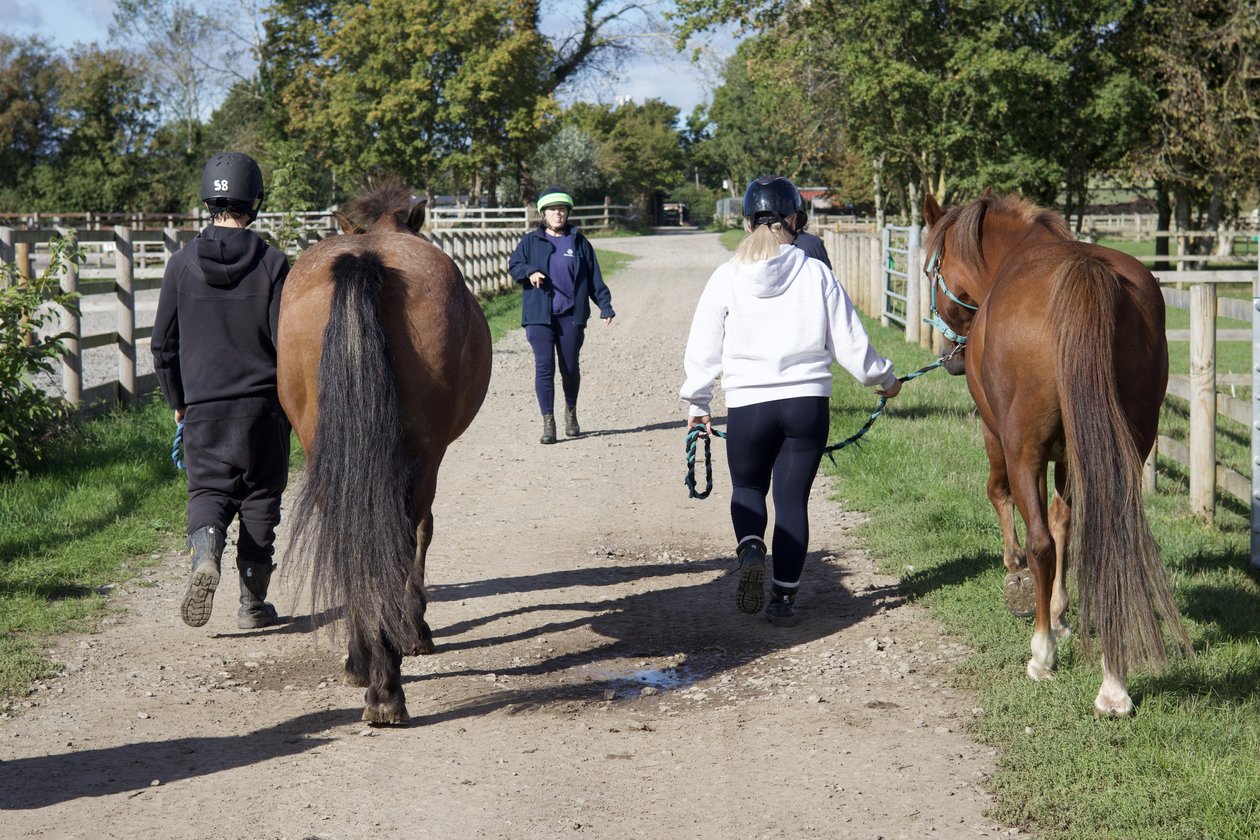
Young people enrolled on a year long Level 1 Award at HorseWorld. Photo Credit: AK Equine Photography
Jo Harding, HorseWorld's Head of Discovery, responds to the final Milburn report published today.
The publication of the Alan Milburn Review, From a Welfare State to a Working State, is an opportunity to rethink how we support young people who are not in education, employment or training (NEET). Its ambition to reduce NEET numbers by 2036 is welcome.
But if we want to change young people's prospects, we cannot wait until they turn 16.
The young people who will be aged 16–25 over the next decade are in our schools, families and communities now. Some are just six.
At HorseWorld Trust, we see young people whose connection with education, relationships and their sense of what might be possible for their future have become increasingly fragile. We see hope return when someone steps in early, offers a different environment and keeps showing up.
The review rightly identifies the need to recognise difficulties earlier, broaden the routes through education and build stronger relationships around young people. These are things we see every day in our work at HorseWorld. Prevention is not a one-off intervention. It is a relationship that lasts.
The barriers do not begin at 16
Poverty, anxiety, unmet additional needs, difficulties at home, low confidence, relationship struggles and poor attendance can make education harder. These barriers are not always visible. They do not mean a young person lacks ability, ambition or potential.
The Milburn Review recognises that many predictors of becoming NEET, including absence, low attainment, exclusion, care experience and SEND, are visible well before a young person leaves education. It also identifies a deeper loss of connection to school and the risk of treating attendance, behaviour, attainment and family difficulties as separate problems rather than understanding the whole picture.
The figures in Bristol illustrate the scale of the challenge. The 16–17 NEET rate is 5.6%, compared with 3.4% across England – around 65% higher. Severe absence is also a concern: in 2024/25, the rate in Bristol was 3.29%, compared with 2.48% in Bath and North East Somerset and 2.39% nationally.
These are young people, not just numbers. For some, barriers to education and opportunity are already becoming harder to overcome.
Early intervention means understanding what is happening in a young person's life, spotting overlooked strengths and offering support before their connection with education and key relationships weakens further. Our job is not to choose their future. It is to help them see their strengths, build ambitions and make informed choices for themselves.
First, somewhere they feel safe
The review calls for every pupil at material risk of disengagement to be known by an adult who understands their circumstances and can notice when things change. We strongly support this. Young people need adults who see more than attendance figures, behaviour records or assessment results. But what happens when a young person no longer trusts the adults and services offering support?
The review makes clear that the education system must do more than respond to individual symptoms. It needs to understand the whole child and adapt to the different reasons young people struggle to access education. That requires earlier support, more flexible approaches and a willingness to recognise when mainstream provision is not meeting a young person's needs.
But how do we reach those who have already become disconnected from school? Our partnership with Bristol Safer Connections starts here.
Safer Connections supports some of Bristol's most vulnerable and at-risk young people. Together, we offer them a purposeful place to build relationships at their own pace.
Our key contact at Safer Connections recently put it this way:
“HorseWorld provides an incredibly unique and immediate space for our young people that is non-judgmental and purposeful. For young people who feel every adult and agency has an agenda, an expectation of them – HorseWorld is often the only place they choose to be.”
We need to be there when it matters most. Sometimes that means a last-minute session: somewhere to go, someone to talk to, space away from an overwhelming situation. A crisis cannot wait for the next programme, commissioning cycle or appointment. Support must fit young people's lives, not the other way round.
Trust cannot be demanded or timetabled. It grows when adults keep their word and stay when things get difficult.
Education must offer different routes
Milburn writes that “Education should be the strongest bridge between childhood and adult working life.” We agree. But that bridge must be wide enough for every young person to access it.
The review recognises that one academic route does not work for everyone. It calls for a broader education offer, with different opportunities to discover and develop aptitude, and recognises the importance of high-quality alternative provision for young people who leave mainstream education.
This is welcome. But alternative provision must not be seen only as a response to suspension or exclusion. Some young people need a different approach long before they reach that point. Others may have struggled to access mainstream education from the outset, without ever being formally excluded.
A guarantee of education, training or work is only meaningful if young people have a realistic, supported route into it. For some, the first step will not be a college course or apprenticeship. It may be practical learning, trusted relationships and the gradual rebuilding of confidence. These are not lesser alternatives to education. For some young people, they are what makes education possible.
At HorseWorld Trust, we offer part-time alternative provision for young people struggling in mainstream education or needing additional support to reconnect with learning and wider opportunities.
Young people can attend once or twice a week over a term, an academic year or, where appropriate, for longer as part of their school journey. Time to practise and work through challenges matters. A difficult session is not the end. They can come back, rebuild and try again.
Rescued horses offer a different way in. Working alongside them, young people practise communication, boundaries, responsibility, trust and emotional regulation. They see how their actions affect others, respond to feedback and build confidence through doing.
Our rescued horses have often experienced difficult beginnings themselves. Their stories create a powerful starting point for conversations about trust, relationships, resilience and the importance of patience and consistent care. Young people can explore these themes through their connection with the horses, sometimes finding it easier to recognise and talk about difficult experiences when they are not expected to begin with their own.
This does not replace mainstream education or suit everyone. It works alongside schools and other services, giving each young person space to make progress at a pace that works for them.
More than a safety net: partners in prevention
The Milburn Review highlights the need for stronger partnerships and a more joined-up understanding of young people's circumstances. It recognises that responsibility can become fragmented, with different services responding to individual difficulties without anyone seeing the whole picture.
Small charities and voluntary organisations can help bridge those gaps. They can reach young people who struggle to engage with formal services, offer practical experiences and provide steady relationships in different environments.
They should be partners in prevention, not a last resort.
HorseWorld delivers 46 sessions a week, including two dedicated to crisis support. Our full-day course leads towards a qualification for young people who would otherwise not be in education or training. More than 60 young people are on site each week.
Keeping that support available takes more than funding individual sessions. It requires investment in the people, relationships and organisational flexibility that make consistent support possible.
Short-term funding and demands for quick results put that support at risk. A difficult week can mean a young person needs more help, not that the help has failed.
If the ambitions in the Milburn Review are to become reality, community organisations need to be recognised and funded as part of the wider education and participation system. That means longer-term support, ongoing part-time provision and commissioning that values relationships and responsiveness, not just sessions or qualifications.
Crucially, young people must be able to access this support before they reach crisis point or are formally excluded.
See the young person, not just the outcome
Qualifications, full-time education and employment matter. But progress starts long before those milestones. Confidence, wellbeing, communication and trust count too. So does joining in, recognising a strength or feeling ready to choose a next step.
A young person may not be ready to move straight into college, training or employment. That does not mean they are making no progress. Building the confidence, relationships and practical skills to take that next step is progress in itself. We need to recognise and value these foundations alongside qualifications and destinations.
What needs to change?
The Milburn Review sets out an important ambition. To make it work for all young people, we must ensure that its proposals reach those who are already struggling to access education, as well as those at risk of becoming disconnected in the future.
That means:
- Invest earlier. Identify difficulties in primary and secondary education, and offer support before a young person's connection with learning breaks down.
- Recognise different routes through education. Value sustained, part-time alternative provision and practical learning alongside mainstream education. Make sure support is available before exclusion, not just afterwards.
- Make guarantees accessible. Ensure young people who have been out of education, or who cannot yet manage a conventional college or training placement, have a supported route into the opportunities being promised.
- Fund continuity and flexibility. Give community organisations longer-term, sustainable funding to retain skilled teams, build relationships and respond when needs change.
- Strengthen partnerships. Connect schools, colleges, local authorities, charities and services so that responsibility is shared and young people do not fall through gaps between them.
- Measure more than destinations. Value engagement, confidence, wellbeing and participation alongside qualifications and education, employment and training outcomes.
- Let young people shape their futures. Help them discover strengths, build ambitions and make informed choices. One route will never suit everyone.
The children are here. The time is now.
A referral is not enough. Young people need places they want to be, adults who keep showing up and help when they need it, not just when it is scheduled.
The Milburn Review is right to argue that education should be the bridge between childhood and adult working life. But we must make sure that bridge has different routes, and that every young person can access the support they need to reach it.
If we want a different future in 2036, we must invest in the children growing up today. Give them relationships they can trust, support that lasts and the opportunity to discover their strengths and shape their futures.
Start now.